
Milford Sound is BUSY! How to Navigate the Crowds

Updated: Sep 2
Hi, I'm Toby, Owner and Lead Guide here at Luxe Tours.
When Katelyn (my wife and my boss!) and I first started Luxe Tours, we spent countless hours discussing what makes a truly memorable Milford Sound experience. Having both spent years exploring Milford Road and Milford Sound, we've learned that experiencing this magnificent place isn't just about reaching the destination, but also about how you experience it along the way.
That's why we made crowd avoidance a cornerstone of our tour design at Luxe Tours. We believe everyone deserves to experience Fiordland the way it was meant to be experienced, in peace and quiet, completely removed from the hustle and bustle of everyday life.
Here, I share some insights about the challenge of summer crowds, how we've structured our tours to ensure our guests can still find those moments of solitude, and some key tips for navigating the crowds this summer.

Timing is Everything
Something many people don't realise about Milford Sound tourism is that there's a daily surge of visitors that flows like a tide along the Milford Road.
Most tours depart Queenstown between 6:30 am and 7 am, arriving at key stops at roughly the same time and creating a predictable wave of crowds through each major Milford Road stop.

For example, during peak times at Eglinton Valley, you might find hundreds of people trying to get the same photo. Or Mirror Lakes, where visitors often end up shuffling along the boardwalk in a slow-moving queue.
We’ve designed our Luxe Tours with these crowd patterns in mind. On our Queenstown tour, we time our stops to stay ahead of or behind the busiest periods where we can, keeping the day as relaxed as possible.
Our Te Anau departure gives us even more flexibility. By starting from Te Anau, we're already partway up the Milford Road while most Queenstown tours are still getting there. That means some mornings we can have entire stops to ourselves, with just a few other cars on the route.
How Our Guides Navigate the Crowds

Our guides are always looking for ways to keep you out of the crowds. This is one of the parts of the job that experienced local guides get great at over time. It's less about following a fixed itinerary and more about reading the day and adapting.
Alternative Stops
You'll see the main stops listed on our website and on most Milford Sound tour information sites (Mirror Lakes, Eglinton Valley, Monkey Creek, and so on). These are the well-known ones, and we do visit them when conditions are right.
But our guides also know of quieter spots that give you the same kind of scenery and experience without the crowds. When the popular stops are busy, particularly in summer, our guides can pick the quieter stops instead.
Swapping the Order of Stops
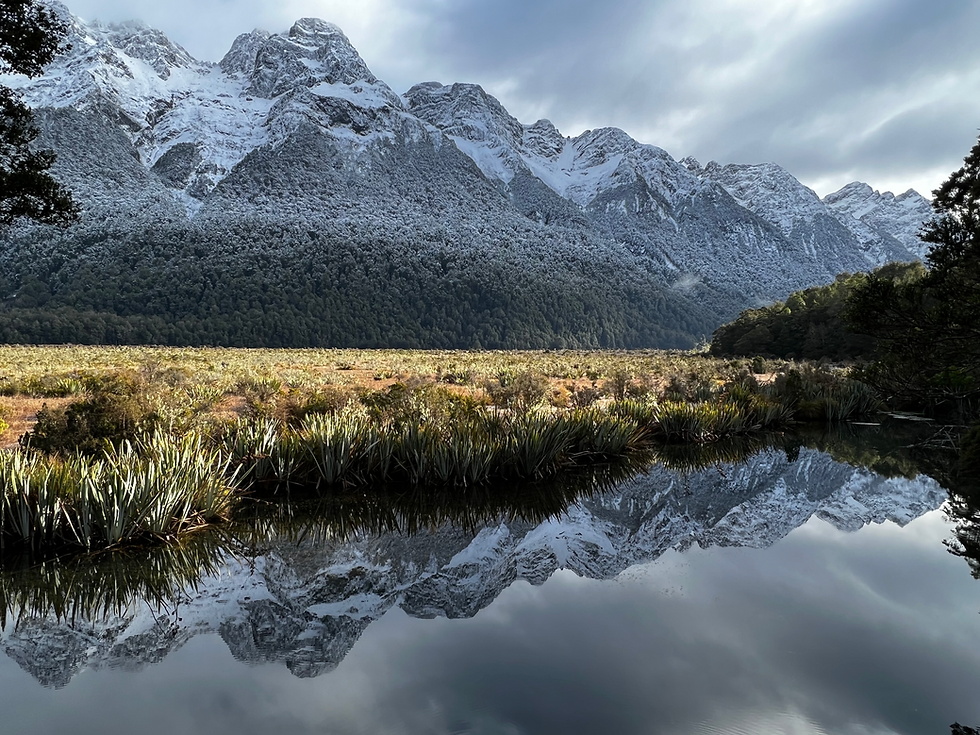
Our guides also swap the order of stops around based on what's happening on the day. If Mirror Lakes is packed on the way in, we might drive past and stop there on the way out, when it's often quieter.
Traffic flow, weather, and how the day is unfolding all feed into these decisions. The goal is always to give you the best possible experience at each stop.
Building In Extra Time
In summer, particularly, we build extra time into our tours so our guides can take those alternative stops without falling behind schedule.
When we know the popular spots will be busy at certain times, having that extra time means we can easily work around the crowds rather than just powering through.
Driver Hours and Behind-the-Scenes Support

Tour drivers have a legal limit on how many hours they can drive per day, so how that time is used really matters. On our Queenstown tours, we have a team based in Queenstown to clean and prepare the vans between tour days.
This means our drivers can go straight home after a tour, and they don't need to spend part of their hours on van maintenance. The knock-on effect is more flexibility during the tour itself, so guides can take that extra time on the road to keep you out of the crowds.
A Recent Example
Recently, our group spent several peaceful minutes near Monkey Creek watching a weka and its chicks foraging in the undergrowth. This kind of quiet wildlife encounter is only possible when you're not surrounded by lots of people.
If we'd arrived at Monkey Creek during peak time with the bigger tours, we would have driven past and stopped on the way back instead. That flexibility is what makes moments like this possible.
The Cruise: Experience Over Size

The cruise part of the day deserves special mention, as we're often asked about boat sizes. Many people assume smaller boats mean fewer crowds, but this isn't quite how it works. What matters isn't the size of the boat, but how the space is used.
We partner with RealNZ on the Milford Haven cruise. Though it can accommodate 300 passengers, RealNZ caps numbers at 150, ensuring plenty of space onboard. Our guests also get reserved window seating in the indoor area, so you're guaranteed a good spot for the cruise.
TIP: The physical size of your cruise vessel doesn't necessarily determine how crowded it feels. Small boats often fill every seat, which gives you the same passenger density as a larger vessel but with fewer places to move around for peace and quiet.
TIP: Luxe Tours guests have the exclusive opportunity to pre-order a lunch got the Milford Haven cruise. The small boat cruises in Milford Sound only offer coffee/tea and snack food such as chip packets and biscuits.
Why Summer is Particularly Busy

As someone who guides tours to Milford Sound year-round, I can tell you summer brings a unique set of challenges. It's peak international tourist season for New Zealand, and from mid-December through January, Kiwis are also on their summer break exploring their own backyard.
The combination of domestic and international visitors creates particular pressure points. Parking areas that are manageable in other seasons get overwhelmed, and popular photo spots can get very congested during peak times.
Our Top Tips for Navigating Milford Sound Crowds This Summer:
1. If you're self-driving, base yourself in Te Anau rather than Queenstown. This gives you the flexibility to start early and avoid getting caught in the wave of Queenstown tours.
2. If you’re self-driving, leave earlier than you need to. Not only does this allow you to avoid getting caught in the tour bus wave, but it also allows you the time to find other stops if you do encounter heavy traffic and want to wait it out.
3. If you're taking a tour, choose a small group tour. You’ll spend less time waiting for people to board and disembark, and a small group allows for more flexible scheduling around crowds.
4. If you're taking a tour and can choose between Te Anau and Queenstown, choose the Te Anau tour. The shorter drive gives your guide much more flexibility to work around the crowds throughout the day.
Our Queenstown tour is designed to work around the busiest periods where possible, but a Te Anau tour gives you the greatest chance of a genuinely quiet experience.
5. Look for cruise operators that cap their passenger numbers below maximum capacity, so you have more space around you on the cruise.
6. Bring your own snacks with you for the day to avoid visiting the small cafe in Milford Sound, as it often gets very crowded in summer. You can also order a meal for your cruise, depending on which provider you choose, so check what’s available on your cruise at the time of booking.
7. If you’re self-driving, aim for flexibility in your Milford Road itinerary. If you arrive at a viewpoint and find it crowded, continue on and consider visiting it on your return journey. This is one of the simplest ways to sidestep the crowds.
After years of exploring Fiordland National Park, we've come to understand that the difference between a good Milford Sound experience and an extraordinary one often comes down to how you navigate the crowds.
Whether you're joining us at Luxe Tours or making your own way there, remember that timing and strategy can make all the difference. Because in the end, it's not just about what you see in Milford Sound, but how you get to experience it.


